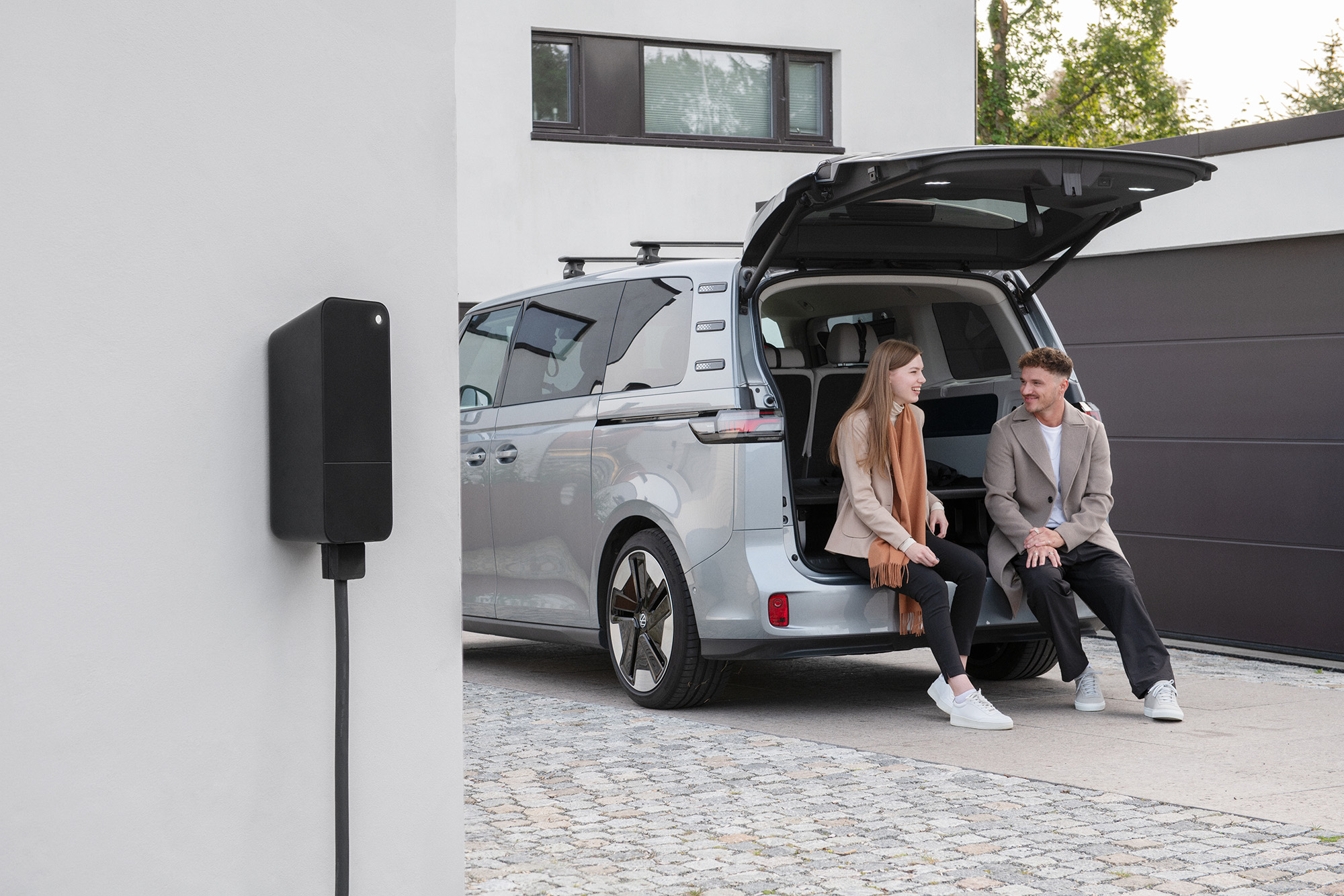
Two years into AHEAD, and the test site is short of power on purpose
AHEAD is a Horizon Europe research project on a blunt problem: putting millions more electric cars on European roads without flattening the distribution grids they charge from. It reached its halfway point in June. Here is where it has got to, and what amina has been doing in it.
Two years down, two to go
In June, partners in the AHEAD project met in Funchal for the third General Assembly, which put it exactly halfway through a four-year run. Nothing dramatic happened. They presented work package updates, the deputy mayor of Funchal said a few words about the city’s electrification plans, and the group went to look at the chargers AHEAD helped install in the city centre. Which is roughly what a research project looks like when it is going to plan.
A recap for anyone who missed the start. AHEAD stands for AI-informed Holistic Electric Vehicles Integration Approaches for Distribution Grids, and it is a Horizon Europe project coordinated by Politecnico di Milano. It runs under a grant agreement from June 2024 to May 2028, with a total cost of 12.8 million euros. The consortium is 21 partners from nine European countries plus five associated partners: universities, distribution grid operators, the fast charging manufacturer Kempower, the charging software company Spirii, and one manufacturer of home charging stations. That last one is us.
The test site that is short of power on purpose
The Nordic demonstration sits at DTU’s Risø campus outside Roskilde, and its defining feature is a deliberate shortage. The site hosts AC chargers from several manufacturers with a combined nominal capacity of 132 kW, fed by a grid connection rated at 43 kW. There is a 30 kW solar array and a 22 kW wind turbine on site as well. Three times more charger than connection, and the task is to make that work through dynamic load balancing and coordinated control across brands that were never designed to cooperate with each other.
That last part is the bit that interests us. Interoperability is easy to claim on a datasheet and considerably harder to demonstrate next to somebody else’s hardware on the same constrained feeder.
A second Nordic site is going in at a rural crossroads in Roskilde Municipality, under the same 43 kW limitation and with a good deal more ambition. A battery of roughly 150 kW and 325 kWh, plus 20 kWp of solar, to deliver 150 kW fast charging from a connection that could not otherwise support it. Kempower monitors that one through Chargeye, with maintenance shared with DTU.
What we are doing in it
amina supplies charging stations for installation at Danish locations, to test functionality that is not in ordinary commercial deployment yet. Ole Martin Dahl, our chief operating officer, leads the work on our side.
Our condition for the time spent has not changed since the start: the project has to look past the purely technical, at commercial value and at business models that could support a higher EV share in countries with weaker grids than Norway’s. That caveat matters. Plenty of research projects produce excellent papers and nothing a grid operator can actually buy.
The reason we are in the room is a phone call that went the unusual way round. We had been reading DTU’s electric mobility research for years, got in touch in 2024 with a specific technical idea, and were invited into the consortium as the only participant making home charging stations. We brought the Norwegian EV Association and Lyse in with us for the Norwegian market experience. Innovasjon Norge put 14.5 million kroner behind the same line of work that year through its environmental technology scheme, for chargers built to communicate with the grid and act as reserve capacity during outages.
By acting as a resource instead of a bottleneck, charging stations can help increase the efficiency of the existing grid.Fredrik Lima, CEO and co-founder, amina
The bidirectional thread
The most useful development of the past year, from where we sit, was AHEAD joining the V2X Cluster in June 2025. The Cluster links eight Horizon Europe projects working on vehicle-to-everything technology, representing more than 80 million euros of EU investment and demonstration sites across 20 European countries.
In November it ran a session at V2G Leaders Europe on the practical obstacles to bidirectional charging, with AHEAD represented by Lisa Calearo. The barriers the speakers listed were the unglamorous ones: vehicle manufacturer compatibility, interoperability and standardisation, data quality and privacy, cybersecurity, and the awkward question of whether anyone can build a business case yet. Worth reading if you have been told V2G is a solved problem.
Where bidirectional charging stands today
What the next two years should produce
The output everyone is waiting for is the simulation tool: a model that predicts where charging stations should go, using one layer for where people need them and another for where the grid can carry them. The smart charging algorithms built on top get tested at seven demonstration sites across Denmark, Italy, Slovenia and Portugal, on cars and heavy vehicles, and in Funchal’s harbour on electric and hybrid boats. There is a cybersecurity strand as well, simulating attacks on chargers in order to work out how they should be defended.
None of it has produced published results we would repeat yet. The Risø site is running, the Danish rural site is going in, and the project newsletter is due shortly. When there is data worth writing about, we will write about it here.
Related